Rwanda and UK Seek to Deepen Higher Education Cooperation Through Strategic Partnerships

Rwanda and the United Kingdom are exploring opportunities to expand cooperation in higher education, with a focus on institutional partnerships, academic mobility, research and the development of skills relevant to Rwanda’s changing economic priorities.
The discussions reflect a growing ambition to move beyond individual scholarship opportunities towards stronger institutional connections that can support knowledge exchange, research collaboration and the international competitiveness of Rwanda’s higher education system.
Speaking at a reception for Rwandan alumni of UK universities, including Chevening and Commonwealth scholars, held in Kigali on 29 October 2026, Higher Education Council (HEC) Director General Dr. Edward Kadozi highlighted the importance of translating international education experiences into lasting professional and institutional partnerships.
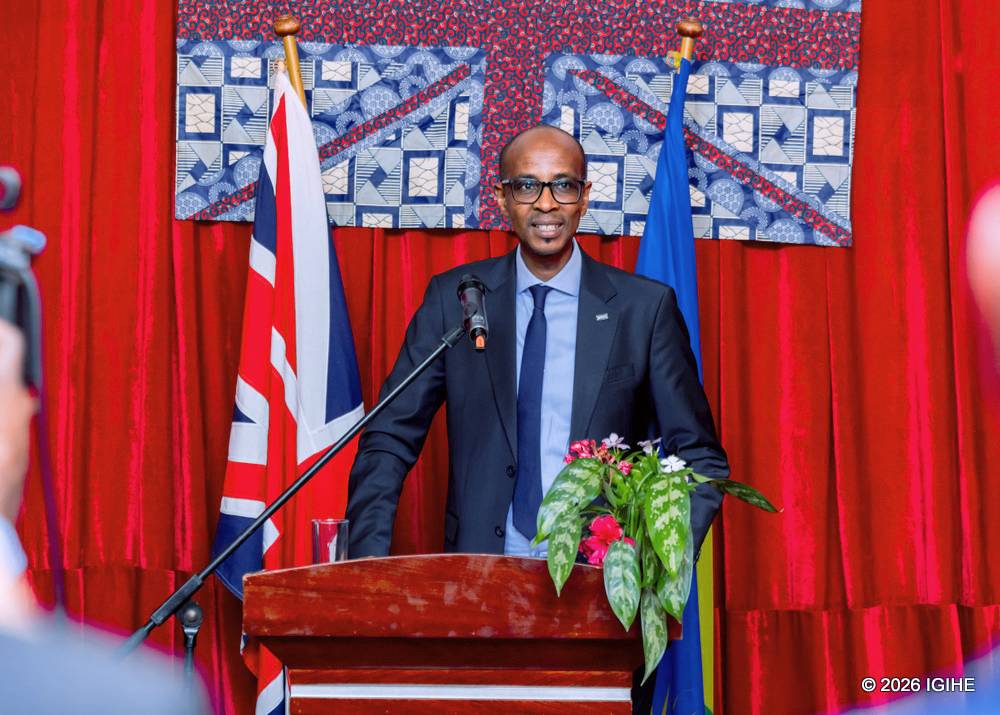
He noted that alumni networks offer an important platform for connecting expertise, fostering professional relationships and creating opportunities for collaboration. He also emphasised that internationalisation should be viewed as more than student exchanges and overseas scholarships, highlighting its role in strengthening institutions, expanding research opportunities and connecting Rwanda’s higher education system to global academic networks.
The British High Commissioner to Rwanda, H.E. Alison Thorpe, also addressed the gathering, reflecting on the longstanding education relationship between the two countries and the contribution of UK scholarship programmes in developing Rwandan talent.
The reception brought together alumni from different professional backgrounds, providing an opportunity to celebrate their achievements and consider how their experiences and networks can support further cooperation.

The engagement builds on discussions held on 7 October 2026, when Dr. Kadozi met with the High Commissioner at HEC headquarters to explore potential areas of partnership. The discussions identified opportunities in fashion and creative industries, mining and exploration, football, research and development, among other disciplines.
Both parties agreed to establish a joint steering committee to advance the discussions and develop a clear partnership strategy, providing a framework for identifying practical areas of cooperation between Rwandan and UK institutions.
These engagements align with HEC’s Higher Education Sector Strategic Plan 2025–2030, which identifies internationalisation as a key reform initiative under its IMPACTS strategic pillar. The strategy seeks to position Rwanda as a competitive regional destination for higher education, while strengthening the global connections and capabilities of its institutions.
Among its 2030 ambitions, HEC targets increasing the proportion of international students in Rwandan higher learning institutions from 9 per cent to 20 per cent, and international faculty from 10 per cent to 30 per cent. It also aims to establish 300 active collaborative agreements with international institutions and attract 15 prominent international higher learning institution campuses to Rwanda, up from a baseline of five.
The strategy reflects a broader ambition to make Rwanda not only a country whose students access international education opportunities, but also a destination that attracts international students, academics, institutions and research partnerships.
This direction is closely linked to Rwanda’s development priorities under the Second National Strategy for Transformation (NST2), covering 2024–2029, and the long-term aspirations of Vision 2050, particularly in human capital development, innovation and the transition towards a knowledge-based economy.
The existing Rwanda–UK education relationship provides a foundation for this ambition, more than 400 Rwandans have studied at UK universities over the past decade through government financing and scholarship programs.
As discussions between HEC and the British High Commission progress, the proposed partnership framework offers an opportunity to build on these connections and translate them into wider institutional collaboration, research opportunities and academic exchange.